Zhongtong buses,
built for Australian operators.
Diesel coaches and school buses. Cummins running gear, ZF independent front suspension, and parts held at Yatala, Queensland.
Specified in Australia,
by people who run buses.
A bus that works in Shandong does not automatically work in Longreach. Every ZBus sold here is built to a specification written in Australia, by Australian bus operators, for the conditions and the contracts we actually have.
Climate systems specified for a Queensland February and a Pilbara afternoon, not a European one.
Cummins engines, ZF and Allison transmissions, and running gear your fitters have worked on for years. The parts are in Australia and the workshop knowledge already exists.
TS160 door safety, ADR compliance, seatbelt monitoring and Australian signage are specified at the factory rather than fitted here afterwards. It is cheaper, neater and it does not void anything.
Up to seventeen hundred kilometres on the H12 Hybrid — 150 km on battery, then 1,550 km on diesel — because a regional charter here is a day that a European coach would call a week.
School work under TS150. Route contracts under state accessibility requirements. Mining transport that has to survive corrugations. The specification was written against those, not translated from someone else’s.
The seating layouts, the camera positions, the bay arrangement and the options list came from Australian operators telling us what they actually need. Where an operator tells us we have it wrong, we change it and we publish the correction.
That is the difference between importing a bus and specifying one. We would rather you asked us hard questions about it than took our word for it — so the safety schedule, the service costs and the compliance answers are all published.
One range. One supplier.
A school run, a charter fleet, a route contract or an airport transfer — one relationship covers all of it, and one parts supply sits behind it.
What are you running?
Most operators arrive thinking about a contract, not a model number.
School and route
Daily contract work, fixed kilometres, TS150 compliance and a fleet that has to start every morning.
Charter and touring
Long distances, passenger comfort, luggage and a toilet. The bus is the product your customer buys.
Community and shuttle
Aged care, hotel transfers, small charter. Where a full-size coach is more bus than the job needs.
Who we belong to.
Industry membership is not decoration. It is how operators check that a supplier is part of the industry rather than passing through it.
We are members of the Bus Industry Confederation, BusNSW, QBIC and BusWA.
What operators say
See inside before you see it.
Tap any point on the vehicle to open that system — what it does, why it matters and the specification behind it. Nobody else in this market lets you do that.
The bus is the easy part.
Parts held in Australia
A bus off the road earns nothing. We hold stock locally rather than ordering from the factory when something breaks.
Factory-backed warranty
Every claim tracked to settlement. Recalls tracked by vehicle identification number until every affected bus is done.
Running costs, worked out with you
Your kilometres, your fuel price, every assumption shown. If we are not the cheapest over ten years, you will see that too.
Work it out before you talk to anyone.
Thirteen guides on what these buses cost to run, what the rules actually require and what to ask a supplier. Written by the people who deliver and service them, not by a marketing department.
Hybrid, electric or diesel: which one now?
What each costs, what infrastructure each needs, and which routes suit which.
What a bus actually costs to run
Fuel, servicing, tyres, downtime and residual value over ten years, and how to work them out for your own operation.
School bus compliance in Queensland
TS150 signage and lights, seating and camera requirements, and what contractors need in place.
Five models available in Australia now.
Every specification below is drawn from the manufacturer's sheets and our own quotation templates. Full documentation is available on request.
Click a bus above, or choose a tab below. The drawings are to scale — the difference in length is real.
Explore any model in detail.
Side by side.
The figures that usually decide it. Where a range is shown, the final specification depends on the seating layout you choose.
Seat counts exclude the driver unless stated. Battery capacities are nominal. Confirm against the current factory specification before ordering.
What happens in year three.
This is the part of the relationship that actually matters, and the part most worth asking any supplier about before you buy.
Parts held locally
Common service and wear items stocked in Australia. Where a part has to come from the factory, you are told the date it is expected and told again if that date moves.
Warranty claims
Lodged, tracked and settled with the factory by us. You deal with one company, not two.
Recall management
Tracked by vehicle identification number until every affected bus is completed — not until a letter has been sent.
Emergency services
Rescue and extrication information published for fire and ambulance crews — where to cut, where the high-voltage systems run, where to isolate. No login, so a crew can reach it at an incident. Open the rescue sheets
Cummins and ZF
Running gear and front suspension from suppliers with existing Australian service networks. Familiar components, widely understood.
Eight-camera system
Standard across the range, including a 360-degree bird's eye view for reversing — where a lot of low-speed incidents happen.
Service contracts
Scheduled maintenance at an agreed rate over an agreed term, so the cost is known rather than discovered. Priced against your kilometres.
Demonstrator programme
Trial a bus on your own route before you commit. Registered, insured and supported, with driver familiarisation included.
Finance
Most operators finance their buses. We are not a credit provider and we do not arrange credit — that is regulated work requiring a licence we do not hold. What we will do is give your financier everything they need: the quotation, the specification, the delivery timing and the expected residual position, in the format they ask for.
If you do not have a financier, we can tell you who other operators in your segment use. That is a referral, not a recommendation, and we take nothing for it.
Where we are
Until our service partner network is named, this is where support comes from today.
Quality used stock,
updated as it changes.
Trade-ins and refurbished vehicles, with photographs, odometer readings and honest descriptions. The listing comes straight from our management system, so a sold bus disappears the moment it sells.
Every used bus comes with
A written sale agreement warranting clear title — that we own it and there is no finance owing on it. An honest odometer statement. And your rights under the Australian Consumer Law, which apply to a used vehicle as they do to a new one.
We left. We have come back properly.
Zhongtong buses have been in Australia for over twenty years. We withdrew during COVID. We have returned with local distribution, parts held here, and a team that has spent its working life around Australian operators.
Zhongtong has built more than 300,000 buses, of which more than 100,000 are new energy vehicles, across a range of more than 140 models. Five of those are available here now.
Glenn Davidson
National Corporate Sales Manager
Barry Henderson
National Sales Manager
Yatala, Queensland
55 Computer Road, Yatala QLD 4207. National coverage from a South-East Queensland base.
Who we belong to
We are members of the industry bodies that represent bus and coach operators in this country. That matters because it is where the standards get argued about, and because it means you can ask somebody other than us whether we are worth dealing with.
Zhongtong Bus Australia Pty Ltd
ACN 685 959 568 · ABN 47 685 959 568
Zhongtong worldwide
Every ZBus vehicle is built by Zhongtong Bus Holding Co., Ltd of Liaocheng, Shandong. The same factory supplies city bus fleets to transport authorities in Singapore and the Gulf, where the buses run the long hours and hard climates that Queensland asks of them.
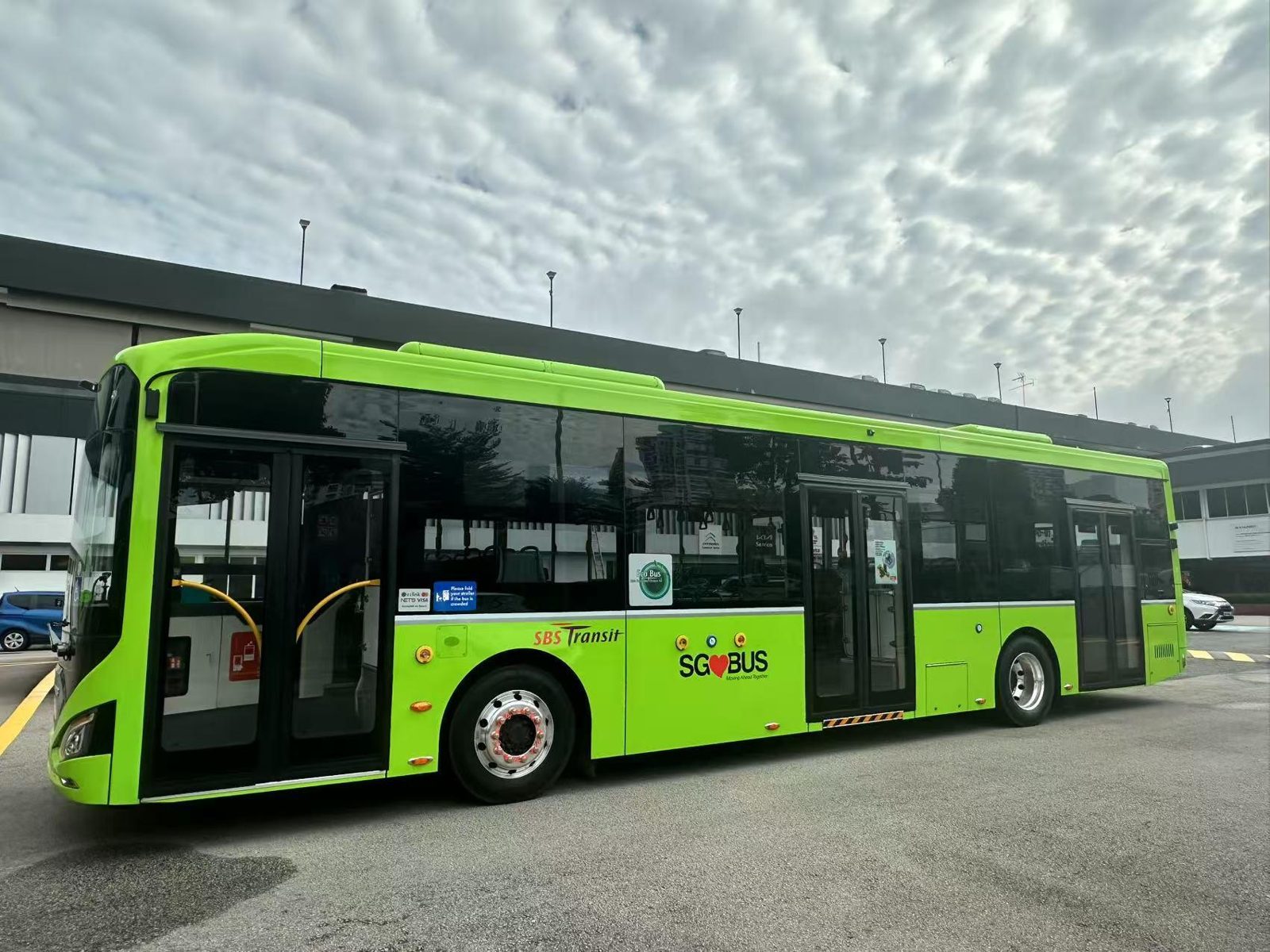
Singapore — Land Transport Authority
120 twelve-metre low-floor electric city buses, delivered from 2024Supplied with Zhongtong’s Singapore partner, Cycle & Carriage Automotive, and type-approved under the Land Transport Authority’s vehicle approval system. The fleet has passed five million kilometres of revenue service on Singapore’s public routes. Cycle & Carriage has put about 200 Zhongtong buses onto those routes in total.
Three-door low-floor body, lithium iron phosphate traction battery with liquid cooling, ZF axles, air-conditioning sized for a tropical climate.
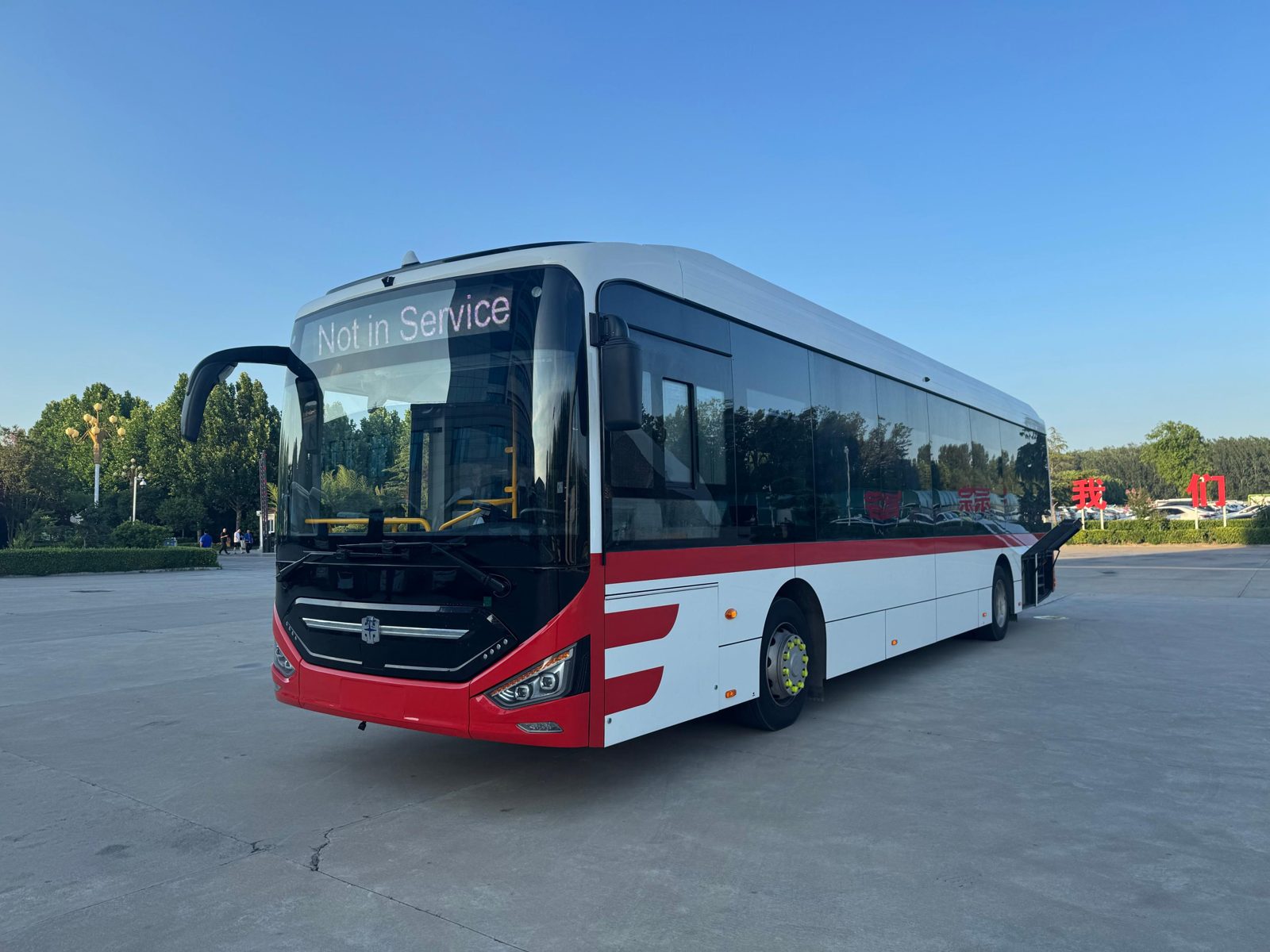
Dubai — Roads and Transport Authority
50 twelve-metre low-entry diesel city buses, 2024–2025Accepted by the RTA in July 2024 and supplied through Zhongtong’s UAE partner, Swaidan Trading (Al Naboodah Group). Rear-mounted Cummins Euro VI engine, with cooling and air intake engineered for Gulf summers and dust.
Swaidan has put more than 2,000 Zhongtong buses into service across the UAE since 2020, for public transit, school transport and staff transport, with the RTA, Emirates Transport and School Transport Services among the customers.
Figures as stated by Zhongtong and its partners in Singapore and the UAE, October 2026. Photographs: Zhongtong Bus Holding Co., Ltd.
Tell us about the run.
How many kilometres a day, how many passengers, what the contract requires. We will tell you which of ours fits, what it costs to run, and how long it takes to get here.
And if we are not the right answer for what you need, we will tell you that too.
Zhongtong Bus Australia Pty Ltd
55 Computer Road
Yatala QLD 4207
Glenn Davidson
National Corporate Sales Manager
0477 957 513
glenn@zbus.com.au
Enquiry
This writes straight into our management system as a lead, so it cannot be lost in somebody’s inbox. If the system cannot be reached it falls back to email.
Useful things we have learned.
Written for Australian operators, whether or not you ever buy from us. Running costs, compliance, powertrain choices and what to check before you sign anything.
Get these as they are published
Roughly one a fortnight. Running costs, compliance, and what to check before you sign anything. No sales email, and one click to stop.
The things operators actually ask.
Including the one everybody thinks and few say out loud.
What will it cost you
to run over ten years?
Fuel, electricity, servicing and tyres. Your kilometres, your fuel price, every assumption shown and every one changeable.
The purchase price is deliberately not in here. It depends on the exchange rate on the day, the shipping and what your contract requires, so we will quote it properly rather than bury a guess inside a total.
Your operation
Purchase price
Put in the figure from your quotation and depreciation is included in the totals. Leave it blank and you get running cost only.
We do not publish prices — they depend on the exchange rate on the day, the shipping and what your contract requires. Ask and you will have a real one, usually the same day.
What this does not include
The purchase price, insurance, registration, driver wages, depot costs, finance interest, or charging infrastructure if you go electric. Those are real and they are different for every operator. This is running cost only.
The H12 Hybrid consumption of 27.1 L/100 km is ours, worked back from the 1,550 km diesel range on a 420 litre tank. The other three are indicative until we have measured them on a route. Tyres are costed at roughly six per 100,000 km.
Depreciation is shown only if you put in a purchase price, and it assumes the bus is worth 18 per cent of what you paid after ten years, or 22 per cent for a hybrid. Nobody knows what a bus will be worth in ten years, so treat that as an indication rather than a forecast.
Ask us and we will build this properly with your figures.
Specify it, see it,
then send it to us.
Every option here is from our actual quotation templates — nothing invented. Change the paint and the drawing changes. Tick the options and they go on the enquiry, so the quotation you get back matches what you built.
Model
Livery scheme
Body colour PPG, your colour
Livery style
Livery colours
Wheels
Seat trim
Options
No price is shown, and that is deliberate. A coach price depends on the exchange rate on the day, the shipping, and what your contract requires. We will quote it properly.
Every mark on it,
marked on it.
Nobody expects a used bus to be perfect. What they resent is finding a dent after they have paid for it. So we photograph every mark, put it on a diagram, and publish the lot — before you drive four hours to look at it.
This is a worked example
The vehicle and the marks below are illustrative. On a real listing this comes straight out of the management system — the same record the workshop fills in when the bus is inspected on arrival.
What we can deliver.
Straight from our system, updated as it changes. If a bus is here it exists — we are not taking orders against a bus we hope to get.
Order parts online.
Our catalogue, our prices. Build an order, send it, and somebody confirms the parts fit your vehicle before anything is charged — because the fastest way to lose money on parts is to ship the wrong one.
Your order
Find the right part
before you ring anyone.
Every part number Zhongtong lists for the three models in our parts catalogue. Pick your bus, narrow it down, then type what you are after. It tells you the part number and which models it fits, so the order you send us is the right one first time.
Prices and availability come live from our own system, so what you see here is what our parts desk sees. Where a price is on application we have not set one yet — send the part number and we will quote it.
Loading the catalogue…
What this will and will not tell you
It tells you what Zhongtong lists for each model, taken straight from the factory parts catalogues. It does not tell you what we have on the shelf today, and it does not price anything.
Send us the part numbers and we will confirm availability and price, and check they suit your build before anything is charged. Two buses of the same model can differ, so we would rather check than ship the wrong part.
Everything your depot needs
to run a ZBus.
Once you own one, the documentation matters as much as the bus. The Owner’s Hub is a separate site for operators: driver quick references, plain-English system guides, narrated how-to videos, fault-code lookup, service bulletins and the supplier manuals behind them.
Every statement carries a confidence flag
Verified from a manual, photograph or video of the vehicle. Reported by our staff or a customer. Our own judgement. Or not yet known and being chased with the factory. We would rather tell you what we do not know than guess.
Request access for your depot Sign in Emergency services
Access is per organisation and free for ZBus customers and anyone evaluating a ZBus vehicle. One code for the whole depot — trainers, drivers and maintenance.
If a bus is off the road
Ring us before anything else. That is our problem as much as yours, and a phone call fixes it faster than a form.
Glenn Davidson · 0477 957 513 · glenn@zbus.com.au
Who fixes it,
and how fast.
A bus is only as good as the support behind it. This is what we actually have in Australia, stated plainly enough that you can hold us to it.
What we will and will not promise
Held in stock: despatched the same or next working day from Yatala or Cockburn Central.
Not held: ordered from Liaocheng. Air freight for anything that stops a bus, sea freight otherwise. We will give you a date when we have one from the factory, and not before.
A bus off the road: ring Glenn. We treat that as ours to solve, and a phone call moves faster than a form.
What we are still building: a published lead time per part. We would rather not quote one until we have enough delivery history behind it to mean it. We publish where we get things wrong.
Who you actually speak to
What is certified,
and what is not yet.
Procurement people have to check this, so here it is without the marketing. Where something is held we say so. Where it is not, we say that too.
The distinction that matters
A vehicle built to order for an Australian contract is capable of complying with the standards that contract requires. Compliance is demonstrated on the delivered vehicle, against its build, at the time it is supplied. Anyone claiming blanket certification for a model they have not yet built to your specification is telling you something they cannot support.
Australian requirements
The manufacturer
Zhongtong Bus Holding Co., Ltd is listed on the Shenzhen Stock Exchange (000957) and is part of Shandong Heavy Industry. Founded 1958, building buses since 1971, listed since 2000.
The company reports a production facility of 471,000 square metres and annual capacity of 30,000 buses; more than 300,000 buses delivered, of which over 100,000 are new energy vehicles; a range of more than 140 models from 5.5 to 27 metres; and over 700 granted patents, a national enterprise technology centre and a CNAS-accredited laboratory.
Where these figures come from. They are the manufacturer’s own published figures. Larger numbers circulate elsewhere, including for site area, and some sources confuse Zhongtong Bus Holding with the separate Zhongtong Vehicle Group. We use the manufacturer’s figures so that anything you check against it agrees.
Certification: Zhongtong Bus Holding Co., Ltd holds ISO 9001:2015 quality management certification for the design and manufacture of buses and bus chassis (certificate 03224Q30130R3L, issued by CATARC Huacheng Certification, valid to 14 June 2027) and ISO 45001:2018 occupational health and safety certification (issued by China Quality Mark Certification Group in July 2026). Copies are available on request. Environmental management certification is still being confirmed, and we will not claim it until we can show you the certificate.
A Queensland business,
with a real address.
Anyone can register a company and import a bus. This is what is actually here, so you can check it.
Zhongtong Bus Australia Pty Ltd
ABN 47 685 959 568
55 Computer Road, Yatala QLD 4207
Trading as ZBus
Yatala sits on the M1 between Brisbane and the Gold Coast, in the industrial corridor most South East Queensland operators already drive past. Our parts store, warranty coordination and demonstrator fleet are here.

That page has moved,
or never existed.
Either way you are here now, so here is where most people were heading.
What it pulls,
and how far it goes.
Power, torque and distance, all from our own quotation sheets. Where a figure is not published we say so rather than estimate it.
Power and torque
Engine output as quoted. Power alone tells you very little on a bus — torque low down is what pulls a full load up a grade, which is why both are here.
What we cannot tell you yet
Gradeability — the percentage grade the bus will hold at full weight — is the figure that actually matters on a range crossing, and we do not have a published number for it. We have asked. When it arrives it goes here.
Output figures for the L8 and L7 are not published either. Both are shown as engine and transmission only until they are.
Distance on a tank
The H12 Hybrid runs 150 km on battery before the engine starts, then a further 1,550 km on diesel. Set a consumption figure and the other three recalculate.
Where these numbers come from
Every figure on this page is either from our own specification sheets or from a published source. Nothing is estimated.
Where we sit on fuel, honestly
Our derived 27.1 L/100 km is slightly better than the Australian real-world route and intercity figures above, and clearly behind the best-in-test European coach at 18.2. We are not going to tell you we are the most frugal coach on the market, because we are not.
What is unusual about this vehicle is the 1,700 km combined range and the 150 km of it that produces nothing at the tailpipe. That is the claim worth making, and it is the one we can stand behind.
The 27.1 figure is derived from our published range rather than measured on a route. When we have measured it — with the route, the distance, the load and the date recorded — that number will replace this one.
Photographs of the
actual buses.
Not renderings and not the factory brochure. Our own photographs, taken with the bays open, so you can see how these are put together before you commit to one.
What the odometer said
The instrument photograph was taken at 738 km with the traction battery at 47 per cent. The trip meter read 688.2 km and the average consumption 0.83 kWh per kilometre. That is a real figure off a real vehicle rather than a factory claim, though it covers one period of running rather than a measured route.
Measure your depot
before you order.
The most expensive mistake in this business is a bus that will not go through the door it has to go through every night. Put your numbers in and we will tell you which of ours fit, which are tight, and which do not.
Your depot
Measure the lowest point of the opening, not the middle. Signs, sprinkler heads and roller door tracks are what catch people out.
What this does and does not do
The heights include the roof-mounted equipment, because that is what actually hits the door frame. The L8 is 2.98 m of body and 3.43 m over the climate unit — that difference is a bus that does not fit.
Ground clearance on a ramp is calculated from the overhangs and is indicative. If a result comes back tight, measure it properly or ask us to bring one out and try it. We would rather do that than deliver something that does not work.
The compliance answers,
already written.
Preparing a bid for a government contract means answering the same forty questions about the vehicle, and digging the evidence out of specification sheets to do it. We have already done that. Pick the contract you are bidding for and take the answers.
Use this whether or not you buy from us. If the answers help you win the work, that is a good outcome for the industry.
Read this before you submit it
These answers come from our own specification sheets and are correct as far as we know them. They are not legal advice and they are not a warranty of compliance with your particular contract.
Contract requirements change, and yours may carry conditions we have not seen. Check every line against the tender documents you have been issued, and where an answer says the evidence must come from us, ask and we will put it in writing.
What it costs to service,
and what the parts cost.
Every manufacturer keeps this until after you have signed. The single biggest worry operators have about a Chinese bus is being held to ransom on parts, and the only honest way to settle it is to publish the numbers before you commit.
So here they are. Service intervals, what gets done, and what the parts cost — the same prices you can order at on the parts page.
Six minutes before
they get in the seat.
A hybrid drives differently to a diesel, and a driver finding that out on a school run at seven in the morning is not ideal. These are short videos covering what changes, filmed against our own photographs of the vehicle.
Watch them, use them, put them on your own induction. We are not charging for them and we are not asking for your details.
These are familiarisation, not training
They will not qualify anybody to do anything. A driver still needs someone competent sitting beside them in the vehicle before they carry passengers, and your own induction still applies.
Nothing here is high voltage instruction. There is 672 volts behind those panels. A driver does not open them, does not pull the service disconnect, and does not investigate a charging fault. That work belongs to someone qualified for it, and if you are not sure whether you are, you are not.
How much of your run
would be silent?
Every operator looking at a hybrid asks the same question and nobody answers it: on my route, with my stops and my hills, how much actually runs on battery? Put your run in and find out.
Your run
Built from our published figures and the consumption we measured off a real vehicle. It is an estimate, and the assumptions are listed under the result.
Can your depot
actually charge these?
This is the question that stops most electrification projects, usually after the buses have been ordered. Tell us about your depot and your overnight window and we will tell you what you need, what it is likely to cost, and whether you need it at all.
Your depot
Costs are broad Australian ranges for planning, not quotations. Your network provider sets the real number and it varies enormously by site.
Replacing eleven buses
does not happen at once.
Emissions targets are arriving in contracts and most operators are being asked to plan a transition without anybody helping them think it through. Put your fleet in and see what a staged replacement actually looks like.
Your fleet
Purchase prices are not in this. We will not publish a price we have not agreed with our directors, and an indicative one would make the whole thing wrong.
Our stock and parts,
as a feed you can read.
If you run a fleet system, you should not have to copy prices off a web page. Our stock list and parts catalogue are available as JSON, documented here, free to use and no key required.
Nobody else in Australian bus does this. We think that is odd rather than clever.
Vehicles in stock
GET https://zbus.com.au/api/public/stock
Published, unsold vehicles only. Never includes our cost or our margin.
{
  "count": 3,
  "readyNow": 1,
  "stock": [
    {
      "ref": "V-1043",
      "model": "Zhongtong H12",
      "variant": "Hybrid",
      "seats": 57,
      "length": "12.29 m",
      "available": "Available now",
      "readyNow": true,
      "location": "Yatala QLD",
      "status": "In stock",
      "eta": "",
      "notes": ""
    }
  ]
}
Parts catalogue
GET https://zbus.com.au/api/public/parts?q=filter
Parts we have marked as available to the public, with the same prices you would be quoted. Never includes our cost or our stock count.
{
  "count": 214,
  "parts": [
    {
      "sku": "ZT-FLT-0091",
      "name": "Engine oil filter",
      "fits": "H12 Diesel, H12 Hybrid",
      "price": 48.50,
      "unit": "each"
    }
  ]
}
Ordering parts
POST https://zbus.com.au/api/public/parts-order
Prices are taken from our catalogue at our end, not from what you send. That protects both of us. An order arrives in our system to be priced and confirmed, and you get a reference back.
{
  "name": "Jo Smith",
  "org": "Example Coaches",
  "email": "jo@example.com.au",
  "phone": "0400 000 000",
  "lines": [ { "sku": "ZT-FLT-0091", "qty": 6 } ]
}
The terms, in plain words
Use it. Cache it. Build it into whatever you like. We ask two things: do not hammer it, and do not present our prices as somebody else's.
We will tell you before we change the shape of a response. If you are building against it, send us an email and we will keep you on a list.
Did we deliver
when we said we would?
Every distributor in this industry quotes a lead time and almost none of them publish whether they hit it. We are going to, every quarter, including the quarters that go badly.
What we have delivered so far
Since July 2025 we have delivered more than 50 Zhongtong H12 and H12 Hybrid buses to operators in Queensland and Western Australia, on school, charter and mining work. We have not yet published those deliveries against the dates we promised them.
From the first full quarter we will publish, on this page: how many we promised, how many arrived on the promised date, how late the late ones were, and why.
Including the bad quarters. That is the point of it — a number that only appears when it flatters us is not worth reading.
The shape it will take
| Quarter | Promised | On the promised date | Late | Why |
|---|---|---|---|---|
| Example only | 11 | 9 | 2, by three weeks | Held at the wharf on quarantine inspection |
That row is an illustration of the format, not a result. There is no data behind it and there will not be until there is.
It depends entirely
on what you run.
A hybrid is not the right answer for everybody, and the operators it suits least are the ones best placed to go straight to full electric. Find your situation below and we will tell you honestly where you sit.
How we compare with a Scania plug-in hybrid
Operators ask this, so here is the straight answer rather than a brochure one.
On battery, we are ahead and it is not close. The H12 Hybrid carries a 176 kWh CATL pack. Scania’s plug-in hybrid bus and coach driveline runs a 90 kWh pack. That is roughly double, and it is why we quote 150 km on battery alone while Scania position theirs around zero-emission zone compliance and a claimed reduction in fuel use rather than a long silent range.
Ours is also a different kind of hybrid. On the H12 the engine generates and an electric motor drives the wheels. Scania’s is a parallel arrangement where the engine still drives. Neither is wrong. Ours gives you more kilometres with the engine off; theirs integrates with a driveline their dealers have supported for decades.
Where Scania is genuinely stronger. A dealer network built over fifty years, residual values that hold, and a brand your bank and your board already accept. Those are real advantages and we are not going to pretend otherwise.
If silent kilometres are what you are buying, compare the battery figures and use our route simulator on your own runs. If dealer network and residuals matter more than electric range, go and talk to Scania. We would rather you bought the right bus.
When you should not buy a hybrid from us
If your depot has a good grid connection, solar on the roof, and every route comes home under two hundred kilometres — a full electric bus will beat a hybrid on running cost and on emissions. Not marginally. Substantially.
Our own route simulator says so: on grid power a hybrid saves about a tonne of carbon a year, and with depot solar it is closer to thirteen. If you already have the roof and the connection, an electric bus takes that further still.
In that case buy our N12 City, which is a full electric bus with no engine at all. We would rather sell you the right vehicle than the one with the better margin.
The hybrid case is not that it beats electric. It is that it works in the depot you have today, and it keeps working on the morning something does not.
Where we have
got it wrong.
Specifications change, figures get transcribed incorrectly, and sometimes we simply believe something that turns out not to be true. When that happens on this site we correct it here, with the date and what it was before.
No manufacturer or distributor in this industry publishes a page like this. That is exactly why we do.
Found something wrong?
Tell us. If a figure on this site does not match what you have been quoted, or does not match the bus in your yard, we want to know before somebody makes a decision on it.
Email sales@zbus.com.au or ring Glenn on 0477 957 513. If you are right, it appears on this page with your correction credited if you want it to be.
We keep saying silent.
Here is what that means.
Every hybrid brochure in the world says quiet. Almost none of them let you hear it, which is odd, because it is the one thing you cannot judge from a specification sheet.
These recordings do not exist yet
We have not recorded them, so we are not going to play you something we made on a computer and call it a bus. The panels above are the format, waiting for the real thing.
What we will record: the same vehicle pulling away on battery and then with the engine running, from the kerb at three metres and from a seat halfway down the cabin, with a sound level meter in shot. Same microphone, same position, same day.
If you want to hear it before then, ring Glenn on 0477 957 513 and ask him to bring one to you. Standing next to it is better than any recording anyway.
Where is my bus?
You have paid a deposit on a vehicle that is being built eight thousand kilometres away, and the usual answer to this question is "we will chase the factory and come back to you". That is not good enough, so we made it visible.
Your order reference is on your contract. Put it in and see exactly where your vehicle is, updated as it moves.
Who else can see this
Anybody with the reference. That is deliberate — send the link to your board, your accountant or your contract manager and they can look without ringing you.
The page shows the vehicle, the stage and the dates. It does not show what you paid, and it never will.
Have one brought
to your depot.
Everything on this website is a number or a drawing. None of it tells you what the bus feels like through a roundabout with a full load, or whether it fits the gate you have been eyeing it against.
So take one. We bring it to you, you drive it, your drivers drive it, and we go away again. No obligation and no charge.
Ask for a demonstrator
We come back within one business day with what we can do and when. If we cannot get to you, we will say so rather than leaving you waiting.
What our buses
are actually doing.
Every figure a manufacturer publishes comes from a test cycle. What an operator wants to know is what the bus does on a Tuesday in February with forty two kids aboard and the air conditioning flat out.
So we are going to publish it. Every ZBus in Australia, anonymised, aggregated, updated as the data comes in — consumption, battery share, distance, and the faults.
Right now this is one bus and one reading
We are re-entering the market. The panel above shows what we genuinely have, which is a single instrument reading photographed off an H12 Hybrid at 738 kilometres. That is not a fleet average and we are not going to present it as one.
As vehicles go out and operators agree to share their data, this page fills in. When there are ten buses on it, it will say ten. It will never say more than there are.
If you run one of ours
Sharing your numbers is voluntary and it always will be. Nothing identifies your business, your routes or your drivers — what goes on this page is consumption, battery share and distance, pooled with everybody else’s.
What you get back is the comparison: whether your consumption is high for the work you do, and which of your buses is the outlier. That is worth having, and no manufacturer will give it to you.
Tell us you are interested and we will explain exactly what would be collected before you agree to anything.
Twenty five videos,
recorded on the real thing.
There is a lot on this website. There is a short video for every feature on it — screen recordings of the actual pages — real typing, real clicking, real results — with a narration telling you what the answer means rather than just where to click.
Nothing here is a mock-up. If a number changes on screen, that is the calculator doing it.
What is fitted,
and what is optional.
A school contract asks about safety in detail, and the honest answer varies by model and by what you specify. This page sets it out per vehicle so you can check it against your contract rather than take our word for it.
Green is fitted as standard. Amber is available and specified at order. Grey means it does not apply to that model.
Confirm this against your contract before you order
School requirements differ by state and by contract, and they change. What is standard on our vehicles is not necessarily what your contract requires, and your contract may ask for something that is not on this list at all.
Send us the safety schedule from your tender and we will mark it up line by line, in writing. Fitting something at build costs nothing compared with retrofitting it after delivery.
The reason a depot upgrade
stops being the blocker.
Ask any operator why they have not gone electric and the answer is almost never the bus. It is the depot. The grid connection, the switchboard, the network application, the eighteen months and the tens of thousands of dollars that have to happen before a single vehicle turns a wheel.
A portable charging unit removes that from the critical path. It goes where the bus is, rather than the bus having to come to where the infrastructure is.
It runs off a supply you already have, or independently of one. There is no upgrade to apply for, no queue to join, and no six figure quotation from your network provider before you start.
Charge at the depot on Monday, at a school on Tuesday, at a satellite yard on Wednesday. An operator running out of two or three locations does not need infrastructure at all of them.
If you lease the depot, a fixed installation is money spent on somebody else’s asset. A portable unit is yours, and it comes with you when you move.
This is the point that matters. A charging fault on a full electric bus is a cancelled run. On a hybrid it is a more expensive day, because the diesel is still there.
Where this actually changes the answer
The rural school operator
Three buses, a shed with a sixty three amp single phase supply, and a contract that cannot afford a failed run. On our depot readiness check that comes back needing an upgrade for a full electric fleet — a network application, months of lead time, and a cost that swallows the fuel saving.
With a hybrid and a portable unit, the same operator runs the same routes silently, starts next month rather than next year, and still gets the bus out on the morning the charger will not start.
The operator with more than one yard
Fixed charging means installing at every location, or moving buses around at the end of a shift to get them to the one that has it. A portable unit follows the work instead.
The operator waiting on a grid connection
If your upgrade is approved but eighteen months out, this is what you run in the meantime. You are not sitting on your hands until the substation is energised, and you are not committing to an electric fleet you cannot charge yet.
What we cannot tell you yet
We have not published a specification for the unit, because we do not have a confirmed one. Power rating, plug type, charge time, physical size, weight, price and which models it suits are all outstanding with the factory.
We could estimate them. We are not going to, because an operator who plans a depot around an estimate and finds it wrong has a real problem and we would have caused it.
If this is central to your decision, tell us and we will chase it as a priority rather than as a general enquiry. The moment we have it in writing it goes on this page.
Photographs and specifications.
Images and specification sheets for operators, media and tender submissions. Images are ours or Zhongtong’s.
Specification sheets
Brochure (PDF, 3.3 MB)
Brochure (PDF, 13.3 MB)
Brochure (PDF, 17.0 MB)
Brochure (PDF, 14.6 MB)
Working here.
We are a small team covering the whole country, which means the work is varied and nobody has a narrow job. If you know the Australian bus industry and you want to help rebuild a brand in it, we would like to hear from you.
Sales
Operator-facing roles in New South Wales and Victoria as the network grows.
Workshop
Heavy vehicle technicians, particularly anyone with high voltage authorisation.
Parts
Parts interpreting and inventory as the local holding grows.
No formal vacancies advertised at present. Send a CV to sales@zbus.com.au and we will keep it on file.
Terms, privacy and
what you can rely on.
This site carries a lot of figures, calculators and specifications. Some are published by the manufacturer, some come from our own quotation templates, some we measured ourselves, and some are estimates we built. This page tells you which is which and where you stand.
What you can rely on, and what you cannot
We would rather be plain about this than bury it. Nothing on this website is an offer, a quotation, a warranty or professional advice. A quotation is a document we issue to you, signed, with a validity date on it. That is the thing you can rely on.
The calculators
The route simulator, the depot readiness check, the fit checker, the fleet planner and the running cost calculator are planning tools. They use figures we publish and assumptions we have made, and every one lists those assumptions on the page.
They are not engineering assessments. Before you order a vehicle on the strength of one, measure the door, ask your network provider about the supply, and check the numbers against your own operating data. If a result comes back tight, that is us telling you to verify it rather than trust it.
The specifications
Specifications are supplied by the manufacturer and are subject to change without notice. Vehicles are built to order and what is fitted to yours is what appears on your signed quotation and contract, not what appears here.
Where a figure on this site conflicts with your quotation, the quotation is the one that counts. Where we have found a specification to be wrong, we publish the correction on our corrections page.
Some figures are marked as not published. That means we do not have them, will not estimate them, and have asked the factory. Do not treat an absence as a claim.
The tender compliance answers
Those answers are prepared in good faith from our own specifications and are not legal advice and not a warranty of compliance with your particular contract. Contract requirements change and yours may carry conditions we have never seen.
Check every line against the tender documents you have been issued. Where an answer says the evidence must come from us, ask and we will put it in writing on our letterhead — and that written document, not this page, is what you should rely on in a submission.
Costs, savings and emissions figures
Fuel savings, service costs, part prices and emissions figures are estimates based on stated assumptions. Actual results depend on your routes, your terrain, your drivers, your maintenance, fuel and electricity prices, and how the vehicle is loaded.
Part prices are current at the time of display and may change. Emissions figures use published emission factors and are indicative rather than an audited carbon account. If you need numbers for a regulatory submission, tell us and we will help you get them properly.
Liveries and operator names
The operator colour schemes in the configurator are illustrations to help you picture a vehicle in your own colours. They are approximations from public photography, not official brand specifications, and they are not endorsed by the operators named.
Operator names and marks belong to their owners. Displaying a scheme is not a claim that we supply that operator or that they endorse us. You may not apply a government contract livery without that authority’s written permission. If you are an operator and your scheme is wrong, tell us and we will correct it.
Stock, availability and delivery
Stock shown is available at the time of display and is not reserved until an order is confirmed in writing. Shipping dates, arrival estimates and the stages on the order tracker are our best current information and can move for reasons outside our control — vessels, customs, quarantine and weather among them.
We will tell you when a date moves rather than waiting for you to ask. An estimated date is not a contractual delivery date unless your contract says it is.
Terms of use
Who we are. This site is operated by Zhongtong Bus Australia Pty Ltd, ABN 47 685 959 568, of 55 Computer Road, Yatala QLD 4207.
Using the site. You may use it to research vehicles, prepare bids, plan a fleet and contact us. You may print, save and share anything on it. You may not misrepresent our figures as somebody else’s, or present our prices as your own.
The open data feed. Our stock and parts feeds are published for you to use in your own systems. We ask only that you do not hammer them and that you do not present our prices as another supplier’s. We will tell you before we change the shape of a response if you have told us you are building against it.
Availability. We try to keep the site up and correct. We do not guarantee it will be available, uninterrupted or free of error, and we may change or remove anything on it at any time.
Other people’s sites. Where we link out, we do not control that content and we are not responsible for it.
Liability. To the extent the law allows, we are not liable for loss arising from your reliance on general information on this site, including anything produced by the calculators. Nothing in these terms excludes, restricts or modifies any right you have under the Australian Consumer Law, and where a right cannot be excluded it applies regardless of anything said here.
Which law applies. These terms are governed by the law of Queensland, Australia.
Privacy
What we collect. When you make an enquiry, request a demonstrator, ask for a compliance pack, subscribe or order parts, we collect your name, your business, your email address, your telephone number, and whatever you tell us about your requirement.
When you use the site generally, our analytics records which pages are visited and which tools are used. That data carries no personal information — no names, no addresses, and none of the numbers you type into a calculator. What you put into the route simulator or the fit checker stays in your browser and is never sent to us unless you send it with an enquiry.
What we do with it. We answer you, and we contact you about your enquiry. If you have asked for a quotation, a demonstrator or a compliance pack, we keep a record so we can follow up properly. We do not sell your information and we do not give it to anyone outside our company except where we need to in order to answer you — for example a service partner in your state.
The order tracker. Anyone holding an order reference can see the vehicle, the stage and the dates. That is deliberate, so you can pass the link to your board or your accountant. It shows nothing commercial — no price, no cost, no customer name.
Real world fleet data. If you agree to share operating data from a vehicle, that is voluntary and it stays voluntary. Nothing published identifies your business, your routes or your drivers. We will explain exactly what would be collected before you agree to anything, and you can stop at any time.
Where it is held. Our systems are hosted in Australia. Some service providers we use, including our email and analytics providers, may hold data overseas.
Your rights. You can ask what we hold about you, ask us to correct it, or ask us to delete it. Email sales@zbus.com.au and we will action it. If you are not satisfied with how we handle a privacy matter you can complain to the Office of the Australian Information Commissioner.
Cookies and analytics
We use Vercel analytics to see which pages are read and which tools are used, so we know what is worth improving. It records page views and named events — for example that the route simulator was used — and no personal data is included in any of it.
We store one preference in your browser: whether you have dismissed the welcome panel. That is not tracking and it is not shared.
We do not run advertising cookies and we do not sell data to advertisers.
Copyright and trade marks
The text, drawings, photographs, videos, narration and code on this site are ours or licensed to us. The technical drawings are traced from 3D models of the vehicles. The photographs are our own, except the photographs of the H12 coach, its interior and its driver’s cabin, which are Zhongtong’s.
Take what is useful. The compliance answers, the service costs, the driver familiarisation videos and the calculator results are published for operators to use, including operators who never buy from us. Print them, save them, put them in a submission. We only ask that you do not present them as somebody else’s work.
Zhongtong and its marks belong to Zhongtong Bus Holding Co. Ltd. Operator names and liveries belong to those operators. Cummins, ZF, Allison, CATL, YUCHAI and other component marks belong to their owners, and we use them to identify what is fitted rather than to claim any association.
Australian Consumer Law
Our goods come with guarantees that cannot be excluded under the Australian Consumer Law. Those guarantees sit alongside the manufacturer warranty, and nothing on this site or in our documents takes them away.
If something goes wrong with a vehicle we supplied, deal with us. We lodge and settle factory claims ourselves so you are not chasing an overseas manufacturer.
If you think something here is wrong
Tell us. If a figure does not match what you have been quoted, or does not match the bus in your yard, we want to know before somebody makes a decision on it.
Email sales@zbus.com.au or ring Glenn on 0477 957 513. If you are right it goes on our corrections page with the date.
Last reviewed 29 August 2026. Zhongtong Bus Australia Pty Ltd, ABN 47 685 959 568, 55 Computer Road, Yatala QLD 4207. This page has not been reviewed by a lawyer.